About the Principal Investigator
Art Fuller leads APSRL with a commitment to rigorous, ethical, and longitudinal applied purpose science research.
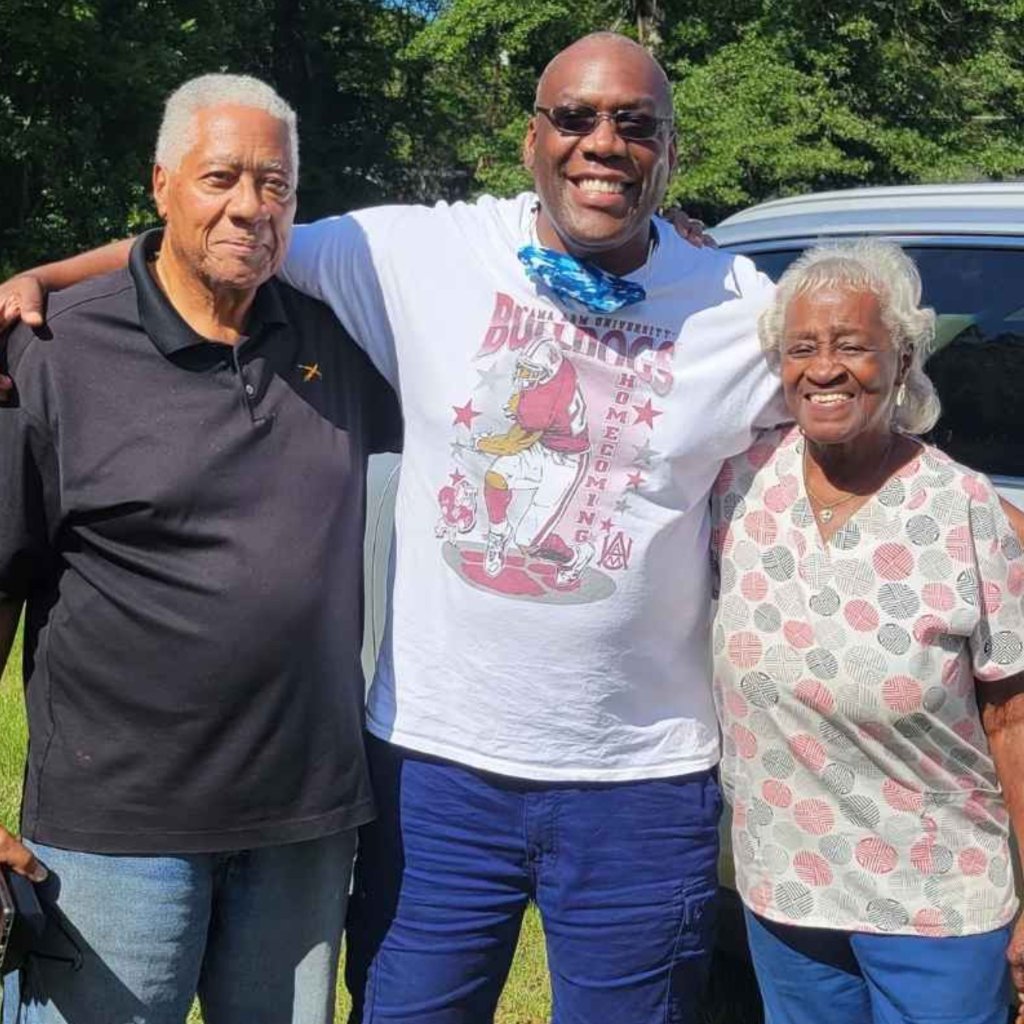
Left: Uncle Charlie | Center: Art Fuller | Right: Aunt Liz
Art Fuller is the Principal Investigator of the Applied Purpose Science Research Lab (APSRL), officially founded on January 2, 2026, and the founding research lead of the Global Purpose Cohort, a longitudinal, mixed-methods initiative studying purpose as a developmental and enacted process.
With experience spanning education policy, behavioral and public health systems, workforce development, and federally funded research, Fuller brings a systems-level perspective to the study of purpose—one grounded in methodological rigor, ethical restraint, and long-term longitudinal thinking.
Historical Foundation: The founder spent 20 years researching his family's history back to the 1820s. This experience, combined with the scientific, philosophical, and cultural grounding of the founder's life, led to the actions that resulted in the launch of this research lab. The birth of APSRL is rooted in deep historical understanding and lived experience.
Training & Teaching: The founder enjoys training and teaching students to research and publish great works connected to purpose. Examples of student publications can be found at perceptionswithimpact.com/Books
Learn much more about the founder and his cultural heritage at fullerroad.life
Research Leadership & Expertise
Fuller has led and contributed to large-scale, regulated research initiatives across public and nonprofit sectors, with a particular focus on populations and systems where identity, wellbeing, and opportunity intersect. His work emphasizes:
As Principal Investigator, Fuller is responsible for research design approval, preregistration compliance, dataset governance, and publication integrity across APSRL initiatives.
Approach to Purpose Research
Fuller's research approach is grounded in a core commitment: purpose must be studied as it is lived, not reduced to a static trait or single score.
This orientation informs APSRL's emphasis on:
His work consistently avoids overclaiming, prioritizing descriptive clarity and ethical patience over premature conclusions.
Where This Work Comes From
This Did Not Begin as Research
It began on Fuller Road.
Fuller Road: Land as Memory, Memory as Method
The Applied Purpose Science Research Lab did not begin in a university, a grant proposal, or a theory paper. It began in Lowndes County, Alabama—a place once known as "Bloody Lowndes," where land, education, and dignity were never abstractions, but matters of survival.
Fuller Road is literal. It is land acquired, protected, and passed down through generations—often against systems designed to prevent Black families from owning anything at all.
That land taught lessons long before they were named:
- • that stability allows learning
- • that recognition precedes confidence
- • that identity is shaped by what is seen and protected
- • that inheritance is not only material, but relational
July 2002: The Recorder on the Table
In July 2002, a small digital recorder sat between a grandmother and her grandson in Murfreesboro, Tennessee. At the time, no one called this "data collection" or "oral history methodology." It was simply a decision not to let wisdom disappear.
That recording—her voice, her cadence, her pauses—would sit quietly for more than twenty years.
And when it was finally played again, decades later, it became clear: What had been preserved was not just history. It was a method of human development.
The First Method Was Not Written—It Was Lived
Long before there was a "method," there was Mary Douglass.
She grew up in a world where Black children were given three months of school while white children received nine. Where respect was not etiquette, but protection. Where land ownership meant independence, and losing land meant erasure.
She learned early:
- • how to listen without interrupting
- • how to speak without exaggeration
- • how to hold stories without rushing them
- • how to create space where truth could surface safely
She did not call this purpose. She called it family.
That way of being—grounded, attentive, precise, patient—would later become the backbone of everything that followed.
From Family Method to Public Method
Years later, that lived methodology encountered formal systems: schools, higher education, public health, behavioral health, workforce and policy environments.
The same pattern appeared everywhere:
People were doing meaningful work—
carrying responsibility—
stabilizing systems—
helping others succeed—
yet struggling to name what they were becoming.
Not because they lacked purpose. Because no one had reflected it back accurately while it was forming.
This was not an individual failure.
It was systemic.
Eventually, this pattern received a name: The Naming Gap.
Why a Research Lab Was Necessary
At that point, something became clear: If purpose, identity, and recognition were left unstudied, they would be oversimplified, commercialized, demanded prematurely, or turned into performance.
The Applied Purpose Science Research Lab was created to prevent that.
Not to own purpose. But to protect it.
The Lab studies:
- • how purpose forms over time
- • how practice becomes learning
- • how recognition stabilizes identity
- • how confidence emerges without coercion
- • how systems unintentionally extract from those they rely on most
The Lab refuses to:
- • rank people
- • assign identity
- • accelerate clarity
- • reduce dignity to metrics
- • turn recognition into reward
This refusal is not ideological. It is ethical.
The Throughline: From Fuller Road to Applied Science
People do not need to be fixed.
They need to be seen accurately, in time.
That insight was not discovered in a lab.
It was inherited.
The science came later.
A Living Inheritance
The Applied Purpose Science Research Lab is not a monument. It is an inheritance in motion.
• the safe space conversations of Mary Douglass (grandmother)
• the land wisdom of Fuller Road (father)
• the discipline of listening before naming (aunt Liz)
• the responsibility to protect what matters as scale increases
This Lab exists because someone listened carefully enough not to forget.
Because family stories were treated as data.
Because dignity was treated as infrastructure.
Because purpose was treated as developmental, not declarative.
And because what began on Fuller Road deserved a future that could carry it—intact.
Foundational Perspective
In addition to peer-reviewed and technical research contributions, Fuller has authored foundational texts that articulate the ethical, historical, and methodological context for Applied Purpose Science. These works do not present outcome claims; rather, they provide transparency around how lived experience, systems history, and reflexive practice inform responsible research design.
Important Distinction: The separation between narrative context and empirical evidence is central to APSRL's credibility and governance standards.
Cultural Heritage & Foundational Works
The following works reflect Fuller's cultural heritage and the intellectual journey that led to the founding of APSRL. Each has been independently reviewed by scholars across disciplines.
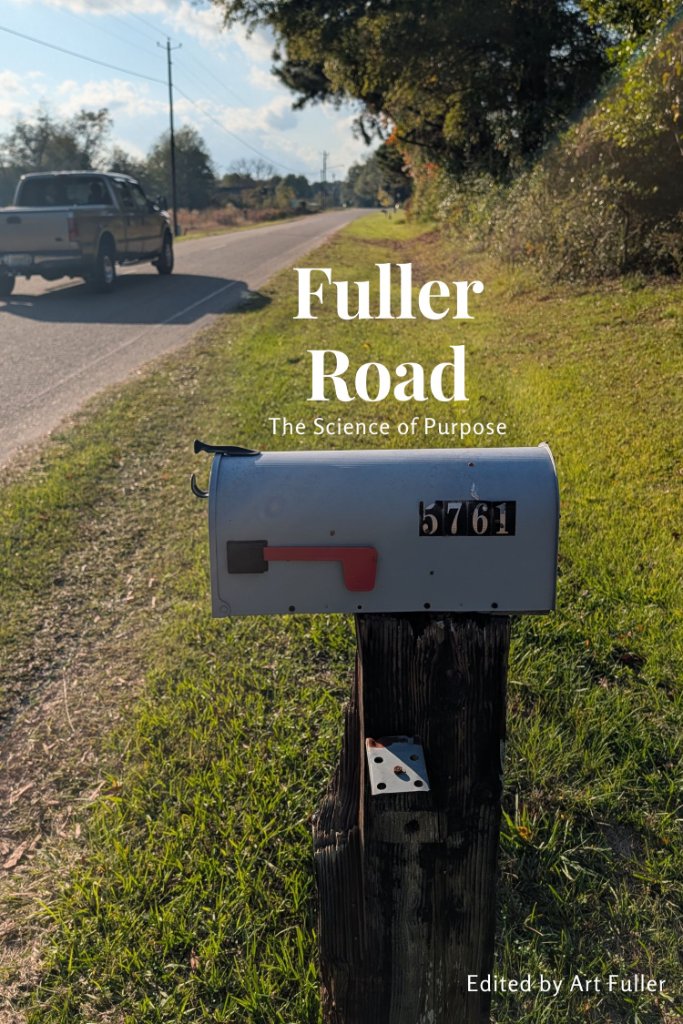
Fuller Road: The Science of Purpose
A deeply personal narrative exploring Fuller's family history back to the 1820s, interweaving historical research with contemporary purpose science. This work establishes the lived context from which APSRL emerged.
Independent Review Summary
Four independent reviews (ratings: 9.8/10, 9.3/10, Exceptional, 4.5/5) recognize this as a landmark multi-generational manuscript documenting 20 years of family history research. This work bridges African American historical documentation with systematic purpose discovery methodology, preserving irreplaceable oral history while establishing the lived context from which APSRL emerged.
Based on 4 independent reviews

Universities of Practice: Defining a New Way
Establishes a new institutional category for applied learning organizations that complement traditional universities through practice-based education and purpose development.
Independent Review Summary
Four independent reviews (ratings: 8.5/10, 9/10, 9.4/10, 9/10) recognize this as serious, credible, and timely institutional work. Praised for exceptional ethical clarity, conceptual originality in defining a new institutional category, and creating responsible vocabulary for applied learning without inflating claims.
Based on 4 independent reviews

Voice Up: Your Pathway to Purpose
Documents the real-world implementation of purpose-centered learning through Voice Up, demonstrating how applied purpose science principles translate into educational practice backed by research.
Independent Review Summary
Four independent reviews (ratings: 9.4/10, 5/5 Excellent, Transformational, 4.2/5) recognize this as a purpose-driven platform with documented clinical outcomes. Verified evidence includes 52% depression reduction, 36% anxiety reduction, and 97.1% satisfaction rate across 489 assessments, reaching 3,774 cities in 134 countries.
Based on 4 independent reviews

Make the Difference: A Research Network for All
A field-building blueprint that reframes research as a humane, early, and participatory practice. This work addresses how curiosity becomes research when reading, writing, and critical thinking are treated as human practices, started early and scaffolded with safety, revision, and real audiences.
Independent Review Summary
Five independent reviews (ratings: 9.5/10, 9/10, 9.5/10, 8.5/10, 9.4/10) recognize this as exceptional, field-shaping work for practice-based education. Praised for reframing the research pipeline, making invisible practices visible, and treating research as a set of human practices that must be accessible early. Reviewers emphasize its coherent ecosystem spanning philosophy, operational tools, and national infrastructure.
Based on 5 independent reviews
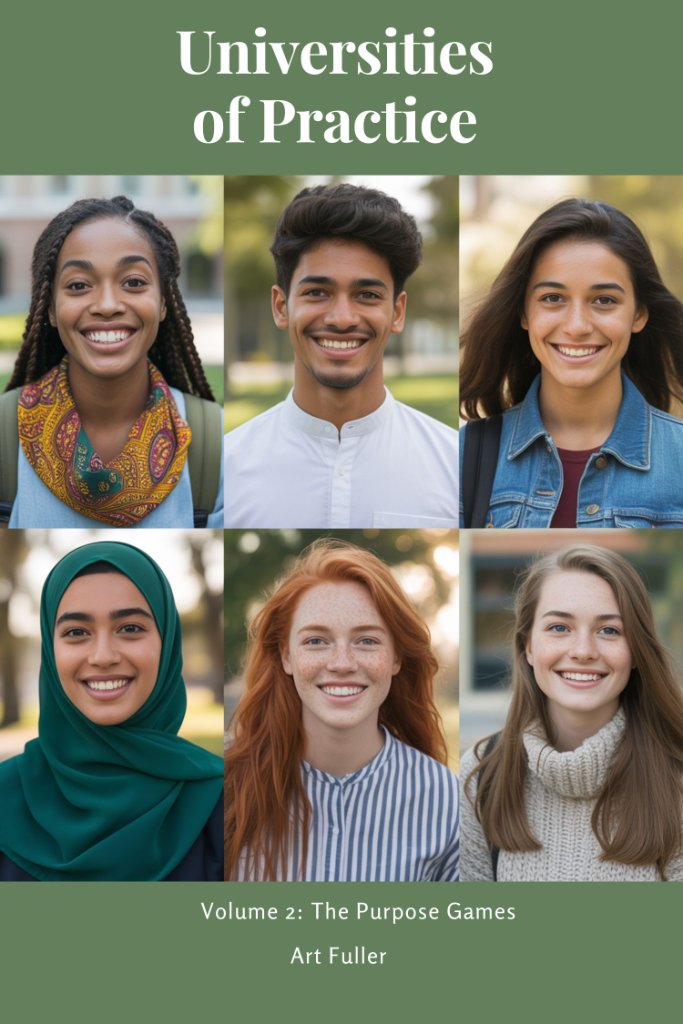
Universities of Practice Volume 2: The Purpose Games
A research-grounded design manual describing an intramural, non-clinical participation model that extends an already-operational purpose and practice system into high school group settings. The Purpose Intramural Games offer a board-safe, low-cost framework for building behavioral health literacy, leadership, and belonging through practice rather than performance.
Independent Review Summary
Four independent reviews (ratings: 8/10, 9.6/10, 9.5/10, 9/10) recognize this as exceptional work for practice-based education. Praised for reframing youth disengagement as a design signal, providing operational readiness with live platform and evidence base, and maintaining rigorous ethical integrity with non-clinical boundaries. Reviewers emphasize its significance for educators, district leaders, researchers, and funders seeking humane, implementable solutions.
Based on 4 independent reviews
Supporting Youth: Net proceeds from all book purchases directly support youth, teens, and adolescents as they discover and find their purpose.
Governance & Ethics
As Principal Investigator, Fuller oversees:
All APSRL research operates under explicit analytic boundaries, with confirmatory claims reserved for preregistered longitudinal analyses.
Institutional Commitment
Fuller leads APSRL with the conviction that field-building requires infrastructure, not just ideas. His work prioritizes:
Training the next generation of researchers
Building shared methodological standards
Supporting inclusive research participation without diluting rigor
Contributing responsibly to academic, institutional, and policy conversations
Purpose Books for Children & Youth
Our programming extends from Pre-K all the way to adult—including helping students create purpose-focused books for children.
These student-authored books address real challenges children face, from managing emotions to understanding purpose.



The Purpose Fellowship
Art Fuller


Pre-K through Adult: These books represent real contributions from students at various stages—demonstrating how purpose development and creative expression work across the entire educational journey.
Research Inquiries
For research-related inquiries, collaborations, or data access requests:
info@voiceup.life